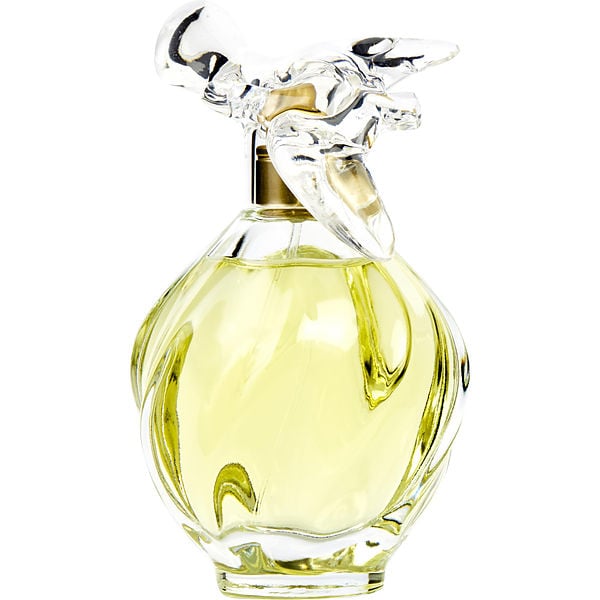
GushNina RicciL'Air Du Temps
nina-ricci L'Air Du Temps
Nina Ricci

L'Air Du Temps

Citrus
Fresh
Floral
Rose
White Floral
Iris
Green
EDT · 1948 · womens

Nina Ricci released L'Air Du Temps in 1948, establishing what would become one of the most influential florals of the 20th century. The fragrance remains a cornerstone of the house's identity and a benchmark for classical feminine perfumery.

The composition opens with aldehydes, bergamot, and neroli alongside peach and Brazilian rosewood, giving a bright, slightly soapy top that feels both fresh and refined. The heart is densely floral, layering rose, carnation, gardenia, and jasmine with orris root and violet adding a powdery elegance. The base settles into amber, benzoin, sandalwood, and a touch of spice, creating a warm, slightly woody finish that prevents the fragrance from being overly sweet despite its substantial floral load.

L'Air Du Temps works best for those who appreciate classic florals without artifice, making it suitable for daily wear across seasons, though it shines brightest in cooler weather. The balance between its aldehydic opening and creamy base gives it surprising versatility. If you gravitate toward The Homesteader, The Sensualist, and The Tactician, L'Air Du Temps deserves a place in your collection.

Adds to your fragrance profile · visible to the community

Not yet ratedYour Gush Score
$69Best · 100ml
$6930d Avg
Rate this fragrance
0255075100
/100
Price Comparison3 retailers · updated daily
SizeUpdated 729m ago
$68.99
at FragranceNet
Buy Now →
RetailerStockPrice
FragranceShop✓ PartnerTesterIn Stock$27.95−$41Buy
Jomashop✓ PartnerTesterIn Stock$32.99−$36Buy
FragranceNet✓ PartnerIn Stock$68.99Buy

✓ authorized retailer · ⚠ verify seller · delta vs. MSRP · we earn a small commission

Price History · 100ml
Low
$62
Avg
$69
Now
$68.99
9 days tracked · 2026-04-25 – 2026-05-16
Alert me when the price drops
We'll notify you once. No spam.
Fragrance Notesbrand verified
Top · 0–30 min
Aldehydes
Aldehydes
The chemical family that created modern perfumery, aldehydes were first used prominently in Chanel N°5 (1921), adding a soapy, abstract, almost metallic sparkle that lifted the fragrance above anything previously possible. They don't smell like anything in nature; their effect is more textural than aromatic. Aldehydic fragrances feel luminous, sophisticated, and distinctly 20th century.
Bergamot
Bergamot
A sun-ripened Italian citrus with a brightness that goes beyond lemon, simultaneously tart, floral, and slightly spicy. It's the defining note of Earl Grey tea and the backbone of countless fresh colognes. Perfumers love it as an opener because it lifts the entire composition without overpowering what follows.
Brazilian Rosewood
Brazilian Rosewood
The heartwood of Aniba rosaeodora produces an oil once used extensively in fine perfumery for its warm, woody, slightly rosy, and faintly camphorous character. Brazilian rosewood is now endangered and heavily restricted, making it extremely rare. Synthetic alternatives are used today, but the original had a unique beauty that modern substitutes approximate.
Carnation
Carnation
Spicy, clove-like, and slightly powdery, carnation is one of perfumery's oldest floral notes, with a warm, almost peppery character that distinguishes it from softer flowers. It has a vintage, slightly old-fashioned quality that is coming back into fashion. Think pressed flowers in an old book, warm and complex.
Neroli
Neroli
Distilled from bitter orange blossoms, neroli sits at the intersection of citrus and floral, bright and slightly waxy, with a honeyed depth that other citrus notes lack. It's one of the most complex natural ingredients in perfumery, simultaneously fresh and rich. A little neroli makes almost any fragrance feel expensive.
Peach
Peach
Ripe, juicy, and velvety, peach has a warm, slightly creamy sweetness that feels lush rather than childish in the right context. It adds a fruity sensuality to floral and oriental fragrances, and its slightly fuzzy quality can even play into tactile, skin-like accords. A note that feels like high summer.
Rose
Rose
The queen of floral notes and the most-used ingredient in fine perfumery. Real rose is simultaneously velvety, honeyed, and slightly spicy, nothing like the synthetic candy version. Depending on the variety used, it can anchor a composition or drift through it like a ghost, adding warmth without dominating.
Heart · 30 min – 3 hrs
Carnation
Carnation
Spicy, clove-like, and slightly powdery, carnation is one of perfumery's oldest floral notes, with a warm, almost peppery character that distinguishes it from softer flowers. It has a vintage, slightly old-fashioned quality that is coming back into fashion. Think pressed flowers in an old book, warm and complex.
Cloves
Cloves
Gardenia
Gardenia
Intoxicatingly creamy and white-floral with a waxy, almost narcotic sweetness. Gardenia shares the heady indolic quality of jasmine and tuberose but with a fresher, greener edge from its glossy leaves. A challenging note to use well, too much overwhelms, but a well-handled gardenia accord is memorably beautiful.
Jasmine
Jasmine
Intoxicating, heady, and slightly animalic, jasmine is one of the few flowers that smells as rich in a bottle as it does climbing a garden wall at dusk. It has an almost fleshy, indolic quality that stops it reading as purely 'clean.' Jasmine is a workhorse in both feminine and masculine perfumery, adding depth and soul.
Orchid
Orchid
Exotic, slightly sweet, and airy, 'orchid' in perfumery is usually a constructed accord rather than a direct extract, designed to evoke the flower's mysterious tropical beauty. Depending on the perfumer, it can read as vanilla-like and warm or cool and green. A note that suggests luxury and rarity.
Orris Root
Orris Root
Rose
Rose
The queen of floral notes and the most-used ingredient in fine perfumery. Real rose is simultaneously velvety, honeyed, and slightly spicy, nothing like the synthetic candy version. Depending on the variety used, it can anchor a composition or drift through it like a ghost, adding warmth without dominating.
Rosemary
Rosemary
Herbal, camphorous, and slightly pine-like, rosemary is a Mediterranean herb with a clean, almost medicinal crispness. It adds freshness and a culinary familiarity to fragrances, grounding more abstract notes in something real. A pillar of classic fougère (fern) fragrances and modern herbal compositions.
Violet
Violet
Sweet, powdery, and faintly green, violet sits between floral and earthy in a way that feels distinctly old-world glamorous. The leaf and the flower smell quite different: the flower is sugary and delicate, while violet leaf is fresh and slightly vegetal. Together they create a note that feels both nostalgic and current.
Ylang-Ylang
Ylang-Ylang
Base · 3–12 hrs
Amber
Amber
A warm, resinous accord rather than a single ingredient, amber is typically built from labdanum, benzoin, and vanilla to create a rich, honeyed, almost solar warmth. It's the quintessential base-note family, adding a comforting richness that makes fragrances feel complete. The difference between a fragrance feeling cold and feeling alive.
Benzoin
Benzoin
Sweet, warm, and balsamic, benzoin resin smells like vanilla mixed with incense, with a powdery, slightly medicinal edge. It adds a comforting warmth and fixative quality to oriental fragrances, and blends beautifully with spices. Often used to smooth and round off sharp edges in complex base notes.
Cedar
Cedar
Iris
Iris
One of perfumery's most prized and expensive ingredients, iris has a powdery, cool, almost carrot-like richness that is hard to describe and impossible to mistake. It's simultaneously earthy and refined, like the inside of an old Parisian couture house. Iris root (orris) adds quiet luxury to anything it touches.
Musk
Musk
The base layer of almost every modern fragrance, a soft, warm, skin-like scent that extends longevity and bridges other notes together. Natural musk was once derived from deer (now banned); today's musks are synthetic and range from clean and soapy to dark and animalic. The right musk makes a fragrance smell like 'you.'
Oakmoss
Oakmoss
The defining ingredient of classic chypre perfumery, damp, forest-floor earthy with a faint bitterness and incredible complexity. Real oakmoss is now heavily restricted by IFRA regulations, which is why vintage chypres smell so different from modern ones. When present, it creates a raw, outdoorsy anchor that no synthetic fully replicates.
Sandalwood
Sandalwood
Creamy, smooth, and milky with a soft, skin-like warmth that clings beautifully. True Mysore sandalwood is one of perfumery's most precious ingredients, simultaneously wood and skin, never cold or sharp. It rounds off sharp edges in any composition and makes the wearer smell subtly, irresistibly warmer.
Spices
Spices
Vetiver
Vetiver
Earthy, smoky, and complex, vetiver root is extracted from a grass native to India and has a scent that is simultaneously rooty, woody, and slightly lemony. It's one of perfumery's great base notes: tenacious, unisex, and endlessly adaptable. A fragrance built around vetiver feels grounded and deeply confident.
Community
Rate this fragrance
Rate this fragrance
0255075100
/100
Most Popular with this Scent DNA Type?
🏡
The Homesteader
Rooted, warm, and entirely self-sufficient.
Warm skin musks, sandalwood, soft cedar, clean vetiver. Grounding, intimate, unhurried.
Discover your type →
Fragrance Family
Floral
EDT

nina-ricci L'Air Du Temps— Prices, Coupons & Buying Guide

Best price today: L'Air Du Temps is $68.99. Without a coupon the lowest price is $68.99. Gush tracks 47+ retailers updated every 2 hours.

Are grey market retailers authentic?

Yes. Jomashop, FragranceNet, and MaxAroma sell 100% authentic nina-ricci fragrances through unofficial distribution channels. The fragrance is identical to department store stock. Grey market refers to the supply chain, not product quality. The price difference comes entirely from the distribution channel.

Frequently asked questions

Cheapest price for nina-ricci L'Air Du Temps? +
$68.99 at FragranceNet. Gush compares 47+ retailers updated every 2 hours.
What does nina-ricci L'Air Du Temps smell like? +
Nina Ricci released L'Air Du Temps in 1948, establishing what would become one of the most influential florals of the 20th century. The fragrance remains a cornerstone of the house's identity and a benchmark for classical feminine perfumery. The composition opens with aldehydes, bergamot, and neroli alongside peach and Brazilian rosewood, giving a bright, slightly soapy top that feels both fresh and refined. The heart is densely floral, layering rose, carnation, gardenia, and jasmine with orris root and violet adding a powdery elegance. The base settles into amber, benzoin, sandalwood, and a touch of spice, creating a warm, slightly woody finish that prevents the fragrance from being overly sweet despite its substantial floral load. L'Air Du Temps works best for those who appreciate classic florals without artifice, making it suitable for daily wear across seasons, though it shines brightest in cooler weather. The balance between its aldehydic opening and creamy base gives it surprising versatility. If you gravitate toward The Homesteader, The Sensualist, and The Tactician, L'Air Du Temps deserves a place in your collection.
What are the notes in nina-ricci L'Air Du Temps? +
Top: Aldehydes, Bergamot, Brazilian Rosewood, Carnation, Neroli, Peach, Rose. Heart: Carnation, Cloves, Gardenia, Jasmine, Orchid, Orris Root, Rose, Rosemary, Violet, Ylang-Ylang. Base: Amber, Benzoin, Cedar, Iris, Musk, Oakmoss, Sandalwood, Spices, Vetiver.
What fragrance family is L'Air Du Temps? +
nina-ricci L'Air Du Temps belongs to the Floral fragrance family. It is an EDT.
What is a grey market fragrance retailer? +
Grey market retailers sell authentic fragrances sourced through unofficial distribution -- typically excess inventory from authorized distributors. The product is real and identical to retail. FragranceNet (est. 1997), Jomashop, and MaxAroma are well-established with millions of verified reviews.

Gush earns a commission on purchases at no cost to you · Prices update every 2 hours · Coupon success rates based on affiliate feed data · Grey market = authentic, unofficial supply chain