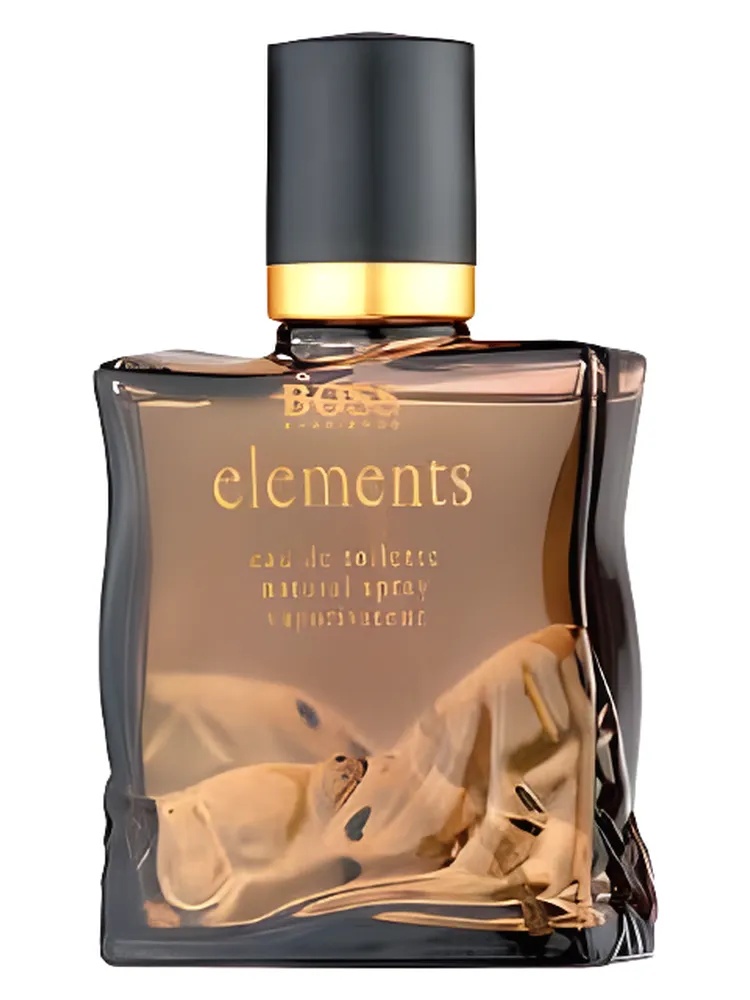
GushHugo BossElements for men
This fragrance is currently unavailable. It may be discontinued or out of stock across all retailers. Check back later or set an alert to be notified if it returns.
Hugo Boss Elements for men
Hugo Boss

Elements for men

Citrus
Fresh
Floral
Rose
Jasmine
White Floral
Green
EDC · 1994 · mens

Hugo Boss's Elements for Men arrived in 1994 as part of the designer house's early fragrance expansion, when the brand was establishing itself beyond fashion into lifestyle categories. It represents a time when Hugo Boss fragrances were positioned as accessible luxury for professional men.

Elements opens with a sharp, herbaceous top driven by artemisia, basil, and lavender over bright citrus and aldehydes, creating an immediately fresh and aromatic impression. The heart develops with spiced herbal notes from caraway and coriander, softened by a delicate floral core of jasmine, rose, and lily of the valley that prevents the composition from becoming too austere. The base settles into a dry, woody structure with cedar and sandalwood, anchored by leather and oakmoss for a leathery, earthy finish that gives the fragrance genuine substance despite its EDC concentration.

This is a classic barbershop-inspired fougère that works best as a daytime or office fragrance, particularly suited to someone who appreciates aromatic herbs and dry woodiness over sweeter compositions. Its moderate performance is fitting for professional settings where projection needs to be restrained. Elements aligns with The Aristocrat, The Sensualist, and The Tactician scent profiles.

Adds to your fragrance profile · visible to the community

Not yet ratedYour Gush Score
ModerateLongevity
Rate this fragrance
0255075100
/100
Price Comparison0 retailers · updated daily
SizeUpdated 0m ago

No listings available for this size.

✓ authorized retailer · ⚠ verify seller · delta vs. MSRP · we earn a small commission

Alert me when the price drops
We'll notify you once. No spam.
Fragrance Notesbrand verified
Top · 0–30 min
Aldehydes
Aldehydes
The chemical family that created modern perfumery, aldehydes were first used prominently in Chanel N°5 (1921), adding a soapy, abstract, almost metallic sparkle that lifted the fragrance above anything previously possible. They don't smell like anything in nature; their effect is more textural than aromatic. Aldehydic fragrances feel luminous, sophisticated, and distinctly 20th century.
Artemisia
Artemisia
The wormwood family, artemisia adds a dry, herbal, slightly bitter greenness that evokes wild Mediterranean hillsides and ancient apothecaries. It's the botanical that gives absinthe its distinctive aura. In perfumery it grounds compositions in something honest and slightly difficult, which makes them feel more real.
Basil
Basil
Sweet, spicy, and vividly herbal, basil has a green freshness with slightly anise-like and peppery facets that make it more complex than most culinary herbs. In perfumery it adds a lively, Mediterranean quality and pairs beautifully with citrus and woody notes. An underused note that rewards those who seek it out.
Bergamot
Bergamot
A sun-ripened Italian citrus with a brightness that goes beyond lemon, simultaneously tart, floral, and slightly spicy. It's the defining note of Earl Grey tea and the backbone of countless fresh colognes. Perfumers love it as an opener because it lifts the entire composition without overpowering what follows.
Lavender
Lavender
One of perfumery's most essential and beloved notes, clean, herbal, and slightly sweet with a calming, familiar quality that works in almost any context. Lavender is simultaneously the most versatile and the most human of ingredients: it appears in barbershop colognes, romantic florals, and sophisticated orientals alike. A note that simply works.
Lemon
Lemon
Sharp, clean, and instantly familiar, the pure zest of fresh-cut lemon peel, not the sugary juice. In perfumery it reads as crisp and energising rather than sweet, and is often used to amplify other light notes. It fades quickly, so it's almost always a top note that makes a striking first impression.
Heart · 30 min – 3 hrs
Caraway
Caraway
Warm, herbal, and distinctly spiced with a slightly anise-like quality, caraway seed adds an unmistakably European spice character to fragrances. It reads as more complex and earthy than fennel or anise, with a dry, almost rye-bread quality. Used in chypres and classic fougeres to add an old-world aromatic character.
Clary Sage
Clary Sage
Dry, slightly fruity, and intensely herbal, clary sage has a warm, tea-like quality with faintly floral and nutty facets. It's the more sophisticated sibling of regular sage, used in Eau Sauvage and countless classic masculines for its clean, Mediterranean character. Simultaneously natural and refined.
Coriander
Coriander
Warm, spicy, and faintly citrusy, coriander seed smells quite different from the green herb, with a dry, woody warmth and a slight floral quality. It adds a spiced, slightly exotic character to masculine fragrances without the sharpness of pepper or the sweetness of vanilla. A supporting spice note that adds complexity.
Jasmine
Jasmine
Intoxicating, heady, and slightly animalic, jasmine is one of the few flowers that smells as rich in a bottle as it does climbing a garden wall at dusk. It has an almost fleshy, indolic quality that stops it reading as purely 'clean.' Jasmine is a workhorse in both feminine and masculine perfumery, adding depth and soul.
Lily Of The Valley
Lily Of The Valley
Crisp, green, and dewy, this spring flower smells like rain on cool grass with a clean, soap-like clarity. It's one of perfumery's most requested scents despite being nearly impossible to extract naturally, so it's almost always recreated synthetically. The result is fresh, tender, and timelessly elegant.
Rose
Rose
The queen of floral notes and the most-used ingredient in fine perfumery. Real rose is simultaneously velvety, honeyed, and slightly spicy, nothing like the synthetic candy version. Depending on the variety used, it can anchor a composition or drift through it like a ghost, adding warmth without dominating.
Violet
Violet
Sweet, powdery, and faintly green, violet sits between floral and earthy in a way that feels distinctly old-world glamorous. The leaf and the flower smell quite different: the flower is sugary and delicate, while violet leaf is fresh and slightly vegetal. Together they create a note that feels both nostalgic and current.
Base · 3–12 hrs
Amber
Amber
A warm, resinous accord rather than a single ingredient, amber is typically built from labdanum, benzoin, and vanilla to create a rich, honeyed, almost solar warmth. It's the quintessential base-note family, adding a comforting richness that makes fragrances feel complete. The difference between a fragrance feeling cold and feeling alive.
Cedar
Cedar
Leather
Leather
One of perfumery's most complex accords, smoky, animalic, and slightly woody, evoking tanned hide, polished saddles, or fine gloves depending on the recipe. Leather adds sophistication and edge simultaneously, and is deeply associated with masculinity in Western perfumery (though the best leather fragrances transcend gender entirely).
Musk
Musk
The base layer of almost every modern fragrance, a soft, warm, skin-like scent that extends longevity and bridges other notes together. Natural musk was once derived from deer (now banned); today's musks are synthetic and range from clean and soapy to dark and animalic. The right musk makes a fragrance smell like 'you.'
Oakmoss
Oakmoss
The defining ingredient of classic chypre perfumery, damp, forest-floor earthy with a faint bitterness and incredible complexity. Real oakmoss is now heavily restricted by IFRA regulations, which is why vintage chypres smell so different from modern ones. When present, it creates a raw, outdoorsy anchor that no synthetic fully replicates.
Sandalwood
Sandalwood
Creamy, smooth, and milky with a soft, skin-like warmth that clings beautifully. True Mysore sandalwood is one of perfumery's most precious ingredients, simultaneously wood and skin, never cold or sharp. It rounds off sharp edges in any composition and makes the wearer smell subtly, irresistibly warmer.
Community
Rate this fragrance
Rate this fragrance
0255075100
/100
Most Popular with this Scent DNA Type?
🎩
The Aristocrat
Timeless doesn't try. It simply is.
Cool, clean, commanding. Heritage aromatics, classic citrus, dry fougères, refined woods.
Discover your type →
Fragrance Family
Fougère
EDC

Hugo Boss Elements for men— Prices, Coupons & Buying Guide

Best price today: Elements for men is $0.00. Without a coupon the lowest price is $0.00. Gush tracks 47+ retailers updated every 2 hours.

Are grey market retailers authentic?

Yes. Jomashop, FragranceNet, and MaxAroma sell 100% authentic Hugo Boss fragrances through unofficial distribution channels. The fragrance is identical to department store stock. Grey market refers to the supply chain, not product quality. The price difference comes entirely from the distribution channel.

Frequently asked questions

What does Hugo Boss Elements for men smell like? +
Hugo Boss's Elements for Men arrived in 1994 as part of the designer house's early fragrance expansion, when the brand was establishing itself beyond fashion into lifestyle categories. It represents a time when Hugo Boss fragrances were positioned as accessible luxury for professional men. Elements opens with a sharp, herbaceous top driven by artemisia, basil, and lavender over bright citrus and aldehydes, creating an immediately fresh and aromatic impression. The heart develops with spiced herbal notes from caraway and coriander, softened by a delicate floral core of jasmine, rose, and lily of the valley that prevents the composition from becoming too austere. The base settles into a dry, woody structure with cedar and sandalwood, anchored by leather and oakmoss for a leathery, earthy finish that gives the fragrance genuine substance despite its EDC concentration. This is a classic barbershop-inspired fougère that works best as a daytime or office fragrance, particularly suited to someone who appreciates aromatic herbs and dry woodiness over sweeter compositions. Its moderate performance is fitting for professional settings where projection needs to be restrained. Elements aligns with The Aristocrat, The Sensualist, and The Tactician scent profiles.
What are the notes in Hugo Boss Elements for men? +
Top: Aldehydes, Artemisia, Basil, Bergamot, Lavender, Lemon. Heart: Caraway, Clary Sage, Coriander, Jasmine, Lily Of The Valley, Rose, Violet. Base: Amber, Cedar, Leather, Musk, Oakmoss, Sandalwood.
What fragrance family is Elements for men? +
Hugo Boss Elements for men belongs to the Fougère fragrance family. It is an EDC.
What other fragrances smell like Hugo Boss Elements for men? +
What is a grey market fragrance retailer? +
Grey market retailers sell authentic fragrances sourced through unofficial distribution -- typically excess inventory from authorized distributors. The product is real and identical to retail. FragranceNet (est. 1997), Jomashop, and MaxAroma are well-established with millions of verified reviews.

Gush earns a commission on purchases at no cost to you · Prices update every 2 hours · Coupon success rates based on affiliate feed data · Grey market = authentic, unofficial supply chain