GushLancomeMagie Noire
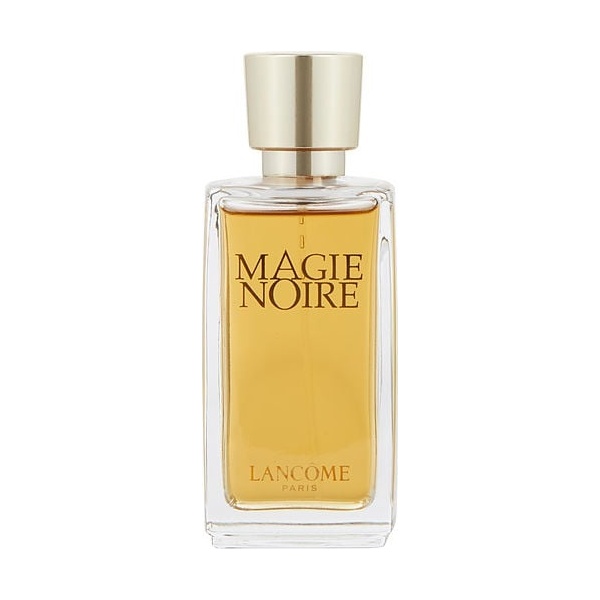
Lancome Magie Noire
Lancome

Magie Noire

Floral
Jasmine
White Floral
Iris
Green
Aromatic
Woody
EDT · 1978 · womens

Lancôme's Magie Noire arrived in 1978 as a bold statement in the house's fragrance lineup, arriving during the peak of the chypre era when dark, animalic compositions were gaining traction in high fashion.

The fragrance opens with a sharp green and earthy profile, led by bergamot, galbanum, and cassis, with floral brightness from Bulgarian rose and hyacinth. The heart softens into a classic chypre structure, with jasmine, tuberose, and ylang-ylang anchored by orris root and a honeyed warmth. The base is where Magie Noire reveals its name, built on a dense animalic foundation of civet and musk balanced by incense, oakmoss, and patchouli, with sandalwood and vetiver providing earthy depth. The overall DNA is simultaneously luminous and shadowy, mixing green florals with dark, earthy undertones.

This is a fragrance for those comfortable with animalic musks and earthy chypre structures, best worn in cooler months when its darker facets won't feel overwhelming. It suits someone drawn to vintage femininity with a modern edge. Explore similar scents through The Mystic, The Cipher, and The Homesteader.

Adds to your fragrance profile · visible to the community
Not yet ratedYour Gush Score
$68Best · 75ml
$9730d Avg
Rate this fragrance
0255075100
/100
Price Comparison1 retailers · updated daily
Size
Updated 554m ago
$68.10
at The Perfume Spot
🔥 Lowest price in 6 days of tracking
Buy Now →
RetailerStockPrice
The Perfume SpotBestIn Stock$68.10Buy

✓ authorized retailer · ⚠ verify seller · delta vs. MSRP · we earn a small commission

Price History · 75ml
Low
$68
Avg
$97
Now
$68.10
6 days tracked · 2026-04-24 – 2026-05-16
Alert me when the price drops
We'll notify you once. No spam.
Fragrance Notesbrand verified
Top · 0–30 min
Bergamot
Bergamot
A sun-ripened Italian citrus with a brightness that goes beyond lemon, simultaneously tart, floral, and slightly spicy. It's the defining note of Earl Grey tea and the backbone of countless fresh colognes. Perfumers love it as an opener because it lifts the entire composition without overpowering what follows.
Bulgarian Rose
Bulgarian Rose
The most prized rose in perfumery, grown in the Valley of Roses in Kazanlak, Bulgaria. Rosa damascena cultivated here produces an oil of extraordinary depth: honeyed, velvety, with faint hints of tea, honey, and spice. The standard against which all other rose materials are measured.
Cassia
Cassia
Chinese cinnamon bark with a sharper, more pungent, and slightly more medicinal quality than true Ceylon cinnamon. Cassia is often what most people mean when they say cinnamon in a fragrance context, as it is more commonly used. It has a dry, woody warmth with a spiced directness that suits oriental and autumn compositions.
Cassis
Cassis
The French name for blackcurrant, cassis has a dark, distinctive fruitiness with a slightly catty, herbal edge that makes it unlike any other berry. It's more complex than blackcurrant juice: both sharp and rich, with an almost savory depth. A signature opening note of certain classic and contemporary fragrances.
Galbanum
Galbanum
One of perfumery's oldest raw materials, a bitter, intensely green resin with a cut-grass, slightly medicinal quality. It's the note that gives vintage green chypres their sharp, naturalistic edge. Galbanum alone is almost unpleasantly aggressive, but in a composition it adds a vivid green freshness that nothing else can match.
Hiacynth
Hiacynth
Raspberry
Raspberry
Bright, tart, and slightly jammy, raspberry adds a vivid fruity pop that is harder and more energetic than peach or apricot. It's a signature note of modern fruity florals and adds an accessible sweetness that broadens a fragrance's appeal. Best used with restraint unless you're deliberately going for big and fun.
Heart · 30 min – 3 hrs
Cedar
Cedar
Honey
Honey
Sweet, waxy, and faintly animalic, honey in perfumery has an almost skin-like quality, intimate and slightly raw. It's related to beeswax in the natural world, and both add a warmth that reads as close and personal. Honey bridges floral and oriental families, adding natural sweetness with a slightly dark edge.
Jasmine
Jasmine
Intoxicating, heady, and slightly animalic, jasmine is one of the few flowers that smells as rich in a bottle as it does climbing a garden wall at dusk. It has an almost fleshy, indolic quality that stops it reading as purely 'clean.' Jasmine is a workhorse in both feminine and masculine perfumery, adding depth and soul.
Lily Of The Valley
Lily Of The Valley
Crisp, green, and dewy, this spring flower smells like rain on cool grass with a clean, soap-like clarity. It's one of perfumery's most requested scents despite being nearly impossible to extract naturally, so it's almost always recreated synthetically. The result is fresh, tender, and timelessly elegant.
Narcissus
Narcissus
Green, honeyed, and slightly rubbery, narcissus (daffodil) is one of perfumery's most complex and difficult white florals. It has an almost animalic indolic quality alongside its sweetness, giving it a raw, living-flower character that synthetic white musks can't match. Used carefully it adds extraordinary depth.
Orris Root
Orris Root
Tuberose
Tuberose
One of the most intensely floral natural ingredients in existence, rich, creamy, and almost narcotic in its sweetness. Tuberose is polarizing by design: it's meant to be enveloping, not background. It has rubbery, vanilla-like facets that make it feel both sensual and slightly retro.
Ylang-Ylang
Ylang-Ylang
Base · 3–12 hrs
Amber
Amber
A warm, resinous accord rather than a single ingredient, amber is typically built from labdanum, benzoin, and vanilla to create a rich, honeyed, almost solar warmth. It's the quintessential base-note family, adding a comforting richness that makes fragrances feel complete. The difference between a fragrance feeling cold and feeling alive.
Civet
Civet
An animalic note with a raw, musky, slightly fecal quality that might sound unappealing but adds extraordinary depth and sensuality in small amounts. Natural civet is no longer used (it was obtained unethically); modern substitutes are kinder but similarly provocative. A hallmark of classic Chanel and Guerlain fragrances.
Incense
Incense
The dry, smoky, slightly woody scent of burning resin, incense in perfumery usually means frankincense or similar resins, adding a contemplative, almost spiritual quality. It creates distance and mystery, making fragrances feel larger than they are. A hallmark of niche, serious perfumery.
Musk
Musk
The base layer of almost every modern fragrance, a soft, warm, skin-like scent that extends longevity and bridges other notes together. Natural musk was once derived from deer (now banned); today's musks are synthetic and range from clean and soapy to dark and animalic. The right musk makes a fragrance smell like 'you.'
Myrrh
Myrrh
Deep, bittersweet, and slightly medicinal, myrrh is a resin with a complex, almost anise-like quality that sets it apart from frankincense. It adds a dark, almost sacred quality to oriental fragrances and is more challenging and assertive than its biblical companion. A note that rewards patience.
Oakmoss
Oakmoss
The defining ingredient of classic chypre perfumery, damp, forest-floor earthy with a faint bitterness and incredible complexity. Real oakmoss is now heavily restricted by IFRA regulations, which is why vintage chypres smell so different from modern ones. When present, it creates a raw, outdoorsy anchor that no synthetic fully replicates.
Patchouli
Patchouli
Dense, earthy, and darkly sweet, patchouli is the scent of damp soil and dried herbs with an almost chocolatey richness. It polarizes people because in high concentrations it's overwhelming, but as a supporting note it adds depth and longevity that almost nothing else can match. The backbone of countless oriental and chypre fragrances.
Sandalwood
Sandalwood
Creamy, smooth, and milky with a soft, skin-like warmth that clings beautifully. True Mysore sandalwood is one of perfumery's most precious ingredients, simultaneously wood and skin, never cold or sharp. It rounds off sharp edges in any composition and makes the wearer smell subtly, irresistibly warmer.
Spices
Spices
Vetiver
Vetiver
Earthy, smoky, and complex, vetiver root is extracted from a grass native to India and has a scent that is simultaneously rooty, woody, and slightly lemony. It's one of perfumery's great base notes: tenacious, unisex, and endlessly adaptable. A fragrance built around vetiver feels grounded and deeply confident.
Community
Rate this fragrance
Rate this fragrance
0255075100
/100
Most Popular with this Scent DNA Type?
🌙
The Mystic
You wear what others can't place — and that's exactly the point.
Warm incense, dry resins, airy woods, smoke with softness. Never obvious.
Discover your type →
Fragrance Family
Chypre
EDT
Decants Available
1
listings in stock
7.5ml$3.60/ml

Lancome Magie Noire— Prices, Coupons & Buying Guide

Best price today: Magie Noire is $68.10. Without a coupon the lowest price is $68.10. Gush tracks 47+ retailers updated every 2 hours.

Are grey market retailers authentic?

Yes. Jomashop, FragranceNet, and MaxAroma sell 100% authentic Lancome fragrances through unofficial distribution channels. The fragrance is identical to department store stock. Grey market refers to the supply chain, not product quality. The price difference comes entirely from the distribution channel.

Frequently asked questions

Cheapest price for Lancome Magie Noire? +
$68.10 at The Perfume Spot. Gush compares 47+ retailers updated every 2 hours.
What does Lancome Magie Noire smell like? +
Lancôme's Magie Noire arrived in 1978 as a bold statement in the house's fragrance lineup, arriving during the peak of the chypre era when dark, animalic compositions were gaining traction in high fashion. The fragrance opens with a sharp green and earthy profile, led by bergamot, galbanum, and cassis, with floral brightness from Bulgarian rose and hyacinth. The heart softens into a classic chypre structure, with jasmine, tuberose, and ylang-ylang anchored by orris root and a honeyed warmth. The base is where Magie Noire reveals its name, built on a dense animalic foundation of civet and musk balanced by incense, oakmoss, and patchouli, with sandalwood and vetiver providing earthy depth. The overall DNA is simultaneously luminous and shadowy, mixing green florals with dark, earthy undertones. This is a fragrance for those comfortable with animalic musks and earthy chypre structures, best worn in cooler months when its darker facets won't feel overwhelming. It suits someone drawn to vintage femininity with a modern edge. Explore similar scents through The Mystic, The Cipher, and The Homesteader.
What are the notes in Lancome Magie Noire? +
Top: Bergamot, Bulgarian Rose, Cassia, Cassis, Galbanum, Hiacynth, Raspberry. Heart: Cedar, Honey, Jasmine, Lily Of The Valley, Narcissus, Orris Root, Tuberose, Ylang-Ylang. Base: Amber, Civet, Incense, Musk, Myrrh, Oakmoss, Patchouli, Sandalwood, Spices, Vetiver.
What fragrance family is Magie Noire? +
Lancome Magie Noire belongs to the Chypre fragrance family. It is an EDT.
What is a grey market fragrance retailer? +
Grey market retailers sell authentic fragrances sourced through unofficial distribution -- typically excess inventory from authorized distributors. The product is real and identical to retail. FragranceNet (est. 1997), Jomashop, and MaxAroma are well-established with millions of verified reviews.

Gush earns a commission on purchases at no cost to you · Prices update every 2 hours · Coupon success rates based on affiliate feed data · Grey market = authentic, unofficial supply chain